
Linking supply and demand in global research, development and demonstration: A supply-driven co-alignment framework for demonstrating Korea’s Carbon-Neutral 100 Core Technologies in developing countries
 ; Lee, Eun Ju**
; Chung, Yong Woon***, †
; Kim, Hyung Ju****
; Shin, Jongseok*****
; Lee, Eun Ju**
; Chung, Yong Woon***, †
; Kim, Hyung Ju****
; Shin, Jongseok*****
Abstract
Despite possessing competitive climate technologies, South Korea’s ecosystem faces a chronic valley of death at the demonstration phase, where technologies stagnate at the commercialization stage due to rigid institutional constraints and a limited domestic market. To address these structural bottlenecks, this study redefines global Research, Development, and Demonstration (RD&D) in developing countries as a strategic “spatial fix” and an innovation pathway for technological completion, moving beyond conventional unilateral foreign aid. Centering on Korea’s Carbon-Neutral 100 Core Technologies, the methodology employs a three-phase supplier-driven co-alignment framework grounded in a logic model specifically tailored for climate technology demonstration within developing-country contexts. The first phase initiates from the supplier side with a strategic analysis involving a sequential screening process, conducted first by policy experts to ensure alignment with national strategic initiatives for global cooperation, and subsequently by technical experts to evaluate R&D necessity and technological rewards at the elemental technology level. The second phase matches these supplier priorities with the official climate demands of recipient countries through Nationally Designated Entities (NDEs), ensuring institutional receptiveness and inter-governmental alignment. The third phase concludes with a final supplier-side verification by multidisciplinary committees—comprising technology, policy, and commercialization specialists—utilizing the Analytic Hierarchy Process (AHP) to prioritize projects based on demonstration feasibility and strategic interests. Findings indicate that sustainable global RD&D hinges on the strategic “push” from suppliers, which is precisely integrated with the “pull” of recipient countries. Ultimately, transitioning national policy toward a reciprocal incentive structure will invigorate global RD&D cooperation and facilitate the international commercialization of carbon-neutral technologies, thereby providing a vital strategic mechanism for South Korean suppliers to successfully bridge the valley of death at the demonstration phase.
Keywords:
Korea’s Carbon-Neutral 100 Core Technologies, Supply-Driven Co-alignment Framework, Reciprocal Collaboration, Developing Countries, Valley of Death1. Introduction
As the global climate crisis intensifies, the strategic value of climate technologies has become more critical than ever as a key driver for the effective implementation of greenhouse gas mitigation and climate adaptation (IPCC, 2023). In response to these international demands, the United Nations Framework Convention on Climate Change (UNFCCC) has established the Technology Mechanism; however, structural bottlenecks in the sustainability of actual cooperation persist (UNFCCC, 2015; UNFCCC Technology Executive Committee and Climate Technology Centre and Network, 2024). While technology-supplying countries tend to remain cautious about substantive technology transfer due to uncertainty in commercial incentives, recipient countries exhibit asymmetric path dependency by relying on one-sided support, resulting in most international cooperation initiatives remaining limited to short-term pilot projects (Ockwell and Byrne, 2016; Seres et al., 2009).
In addition to structural constraints in international cooperation, the domestic foundation of the climate technology industry itself faces multiple challenges, including funding shortages and market uncertainty (An, 2018; Son et al., 2020). In response, the Korean government has undertaken cross-ministerial efforts to foster climate technologies, such as selecting Korea’s Carbon-Neutral 100 Core Technologies and strengthening a mission-oriented R&D innovation system (Government of the Republic of Korea, 2020; Ministry of Science and ICT, 2024). Nevertheless, the domestic climate technology ecosystem is confronted with a “demonstration valley of death”, in which research outcomes fail to diffuse into the market due to the high public-good nature of climate technologies, long investment recovery periods, and the limitations of a relatively small domestic market (IEA, 2023; OECD, 2024). In particular, despite domestic technological capabilities reaching over 80% of those of global leading countries, structural bottlenecks have emerged in which technological gaps cannot be narrowed because of stagnation at the commercialization stage (KCCI–SGI, 2023).
This study focuses on global Research, Development, and Demonstration (RD&D) targeting developing countries as a strategic approach to overcoming these limitations (Ockwell and Byrne, 2016; Sajid et al., 2024). RD&D (Research, Development, and Demonstration) is defined as a non-linear innovation process that bridges the critical gap between laboratory-scale R&D and market commercialization (Jolly, 1997). While traditional R&D focuses on scientific discovery, the demonstration phase serves as a strategic "bridge" to validate technical performance and stakeholder acceptance under actual operational environments (OECD, 2024)1). To date, projects targeting developing countries have largely been discussed from the perspective of benefits to recipient countries, while relatively little attention has been paid to the strategic interests or technological rewards that Korean researchers and developers in the carbon-neutral sector can secure (Park, 2022; Yi and Kim, 2024). As a result, cooperation has often been framed merely as a moral obligation—something researchers “ought to do”—rather than as a pathway capable of generating strategic incentives that researchers actively “want to pursue” (Amoah and Marimon, 2022; Mazzucato, 2018).
Accordingly, this study redefines cooperation with developing countries as a strategic R&D pathway for completing domestic technologies and proposes a reciprocal co-alignment framework that places participation incentives for technology suppliers at the highest priority in project planning (Ockwell and Byrne, 2016; Yi and Kim, 2024). Overseas demonstration in developing countries can serve as a spatial fix that circumvents domestic institutional and spatial constraints, while also functioning as a means to secure clear strategic benefits—such as risk sharing through linkage with international climate finance and early entry into expanding developing-country markets (Bossink, 2017; Climate Policy Initiative, 2024). Based on Korea’s Carbon-Neutral 100 Core Technologies, this paper aims to present a methodology for creating a virtuous cycle in which domestic R&D outcomes evolve into global innovation by identifying promising projects that maximize technological rewards for suppliers (Ministry of Science and ICT, 2024).
To prioritize the realization of tangible returns for technology suppliers, this study defines its analytical scope as Korea’s Carbon-Neutral 100 Core Technologies, which were jointly derived by relevant ministries to achieve national carbon-neutral missions (Government of the Republic of Korea, 2020; Ministry of Science and ICT, 2024). Building on this scope, the study designs a stepwise supplier–recipient–supplier co-alignment framework that begins with the supplier perspective, incorporates recipient-country demands, and ultimately returns to the supplier perspective (Sajid et al., 2024; Yi and Kim, 2024). Through this systematic process, the study proposes a methodology for simultaneously securing technical feasibility and market acceptance, while identifying priority and flagship projects that are aligned with national strategic objectives (KISTEP, 2024; Mazzucato, 2018).
2. Research Background
2.1. The Importance of Climate Technologies and Efforts and Limitations in Building a Global Climate Technology Cooperation Framework
Climate change–induced global social and economic ripple effects are intensifying, and accordingly, the strategic value of climate technologies as a core driving force for the practical implementation of greenhouse gas mitigation and climate adaptation is increasing (IPCC, 2023). Under these circumstances, the United Nations Framework Convention on Climate Change (UNFCCC) and the Conference of the Parties (COP) have defined Technology Development and Transfer as a core pillar of climate action, and have developed a cooperation framework centered on the Technology Executive Committee (TEC) and the Climate Technology Centre and Network (CTCN) (UNFCCC, 2015; UNFCCC TEC and CTCN, 2024).
However, structural limitations still remain in terms of the sustainability of technology cooperation. Technology-supplying countries show weakened willingness to transfer technologies due to concerns such as the protection of intellectual property rights and uncertainty in commercial compensation structures, while recipient countries exhibit an asymmetric structure in which they continuously demand technology and financial resources (Ockwell and Byrne, 2016; Seres et al., 2009). As a result, international climate technology cooperation often remains at the level of declarative agreements, revealing limitations in failing to develop into substantive technology transfer or long-term partnerships (Ockwell and Byrne, 2016; Sajid et al., 2024).
Korea has also actively promoted the entry of excellent domestic technologies into developing countries and their localization and commercialization, in line with these international trends, centering on climate technology cooperation consultative bodies (Green Technology Center, 2018; National Institute of Green Technology, 2023). Through these efforts, Korea aims to contribute to the achievement of national NDCs, preempt emerging global markets, and enhance its status as a climate-leading country; however, the operational approach remains confined to a one-directional, donor-centered beneficiary framework (Park, 2022; Yi and Kim, 2024).
2.2. The Current Status and Limitations of Climate Technology in Korea
The Korean government has also been making proactive policy efforts to develop climate technologies based on an acknowledgment of their importance (Government of the Republic of Korea, 2021; Ministry of Science and ICT, 2024). In particular, the Act on the Promotion of Technology Development for Climate Change Response defines climate change response technologies as technologies related to greenhouse gas mitigation and technologies that contribute to climate change adaptation. This Act aims to establish a research foundation for mitigation and adaptation technologies and to foster and develop them in a systematic manner. In addition, it seeks to promote international cooperation in technology in order to achieve carbon-neutrality and contribute to the development of the national economy, and explicitly stipulates the national responsibility for addressing climate change issues (Government of the Republic of Korea, 2021).
As part of efforts to concretize policy directions into actual technology development, the government selected Korea’s Carbon-Neutral 100 Core Technologies through a joint, cross-ministerial initiative, taking into account the importance of carbon-neutral technologies (Ministry of Science and ICT, 2024). Based on this initiative, the government aims to achieve the 2030 Nationally Determined Contribution (NDC) and carbon neutrality by 2050 through technological innovation. The three fundamental directions of policy implementation are (1) mission planning in partnership with the private sector, (2) rapid and flexible investment, and (3) the establishment of a foundation for technological innovation (Kattel and Mazzucato, 2018; Ministry of Science and ICT, 2024).
The Korean government is not limited to the development of climate technologies, but is devoting extensive policy efforts to ensure that research outcomes can diffuse into the actual market at the commercialization stage. In addition, in order to overcome the structural limitations arising in the climate technology demonstration process, the government is systematically establishing a promotion policy framework, including measures to increase technology commercialization rates and to expand local demonstration activities (e.g., Eighth Plan for the Promotion of Technology Transfer and Commercialization, 2022; First Basic Plan for Climate Change Response Technology Development, 2022).
Despite the government’s multifaceted legal and policy support efforts, the domestic climate technology ecosystem is facing a structural bottleneck in which technological development outcomes fail to translate into actual commercialization (An, 2018; Son et al., 2020). Experts identify the “gap at the demonstration stage” as a decisive factor causing the organic disconnection between the R&D phase and market take-off, and analyze this gap as stemming from three key bottlenecks at the levels of finance, market, and institutions (Bossink, 2017; Sajid et al., 2024).
First, market uncertainty arising from the narrow scale of the domestic market and a policy-dependent demand structure is undermining private-sector dynamism. The climate technology industry exhibits the characteristics of a “policy-dependent market,” in which demand is determined by changes in policy orientation or energy supply and demand conditions. As a result, firms face significant difficulties in establishing long-term investment recovery plans, and when carbon pricing schemes or incentive mechanisms capable of offsetting the high initial costs (Green Premium) compared to conventional technologies are insufficient, the formation of a self-sustaining market is inevitably delayed (IEA, 2021; OECD, 2024).
In particular, domestic firms face limitations in entering public procurement and global markets due to excessive competition within a narrow domestic market and a lack of operational track records in real-world settings. This insufficiency in demand-creation mechanisms further exacerbates funding discontinuities, ultimately acting as a factor that causes firms possessing innovative technologies to be eliminated at the threshold of commercialization (An, 2018; Yi and Kim, 2024).
Second, due to the capital-intensive nature unique to climate technologies and their long investment payback periods, a severe “investment death valley” emerges at the demonstration stage. According to a survey conducted by the Sustainability Growth Initiative (SGI) of the Korea Chamber of Commerce and Industry (2023), more than 60% of domestic climate-tech firms identified difficulties in securing financing as the greatest barrier to commercialization (KCCI–SGI, 2023). Compared to general IT services, climate technologies require a much larger scale of initial capital investment and involve longer investment recovery periods, resulting in a problem of “financial mismatch,” whereby private venture capital investment fails to continue through the later stages of commercialization (Climate Policy Initiative, 2024; OECD, 2024). The burden of such capital costs and financial discontinuities constitutes a major reason why firms that have succeeded in early-stage technology development become stalled at high-risk phases such as large-scale process demonstration (Bossink, 2017; Sajid et al., 2024). The International Energy Agency (IEA, 2023) has likewise emphasized that the severe funding gap at the demonstration stage is a key inhibiting factor in the global diffusion of climate technologies (IEA, 2023).
Third, a phenomenon of “regulatory lag,” in which laws and institutions fail to keep pace with the speed of new technology development, is slowing the pace of innovation. As pointed out by the Korean Association for Regulatory Studies and the Federation of Korean Industries (2024), there are frequent cases in which promising climate technologies—such as waste plastic pyrolysis or hydrogen mobility—are constrained by existing frameworks under the Waste Management Act or current safety standards, preventing them from obtaining even opportunities for demonstration (Korean Association for Regulatory Studies and Federation of Korean Industries, 2024). Even when temporary approvals are granted through regulatory sandbox schemes, delays in subsequent legal and regulatory revisions necessary for full-scale commercialization hinder the stabilization and market entry of these technologies (Korean Association for Regulatory Studies and Federation of Korean Industries, 2024). In particular, for convergent technologies such as renewable energy, hydrogen, and carbon capture, utilization, and storage (CCUS), jurisdictions under multiple ministries—including the Farmland Act, Road Act, and Building Act—are intricately overlapped, and the absence of integrated guidelines exposes a structural limitation in which substantial administrative time and costs are consumed from the demonstration planning stage onward.
In conclusion, as financial, market, and institutional factors interact in a complex and reinforcing manner, domestic climate technology firms face structural difficulties in transitioning from the demonstration stage to full commercialization (Sajid et al., 2024).
2.3. Strategic Value of Global Demonstration Projects Targeting Developing Countries
This study focuses on the necessity of “global demonstration projects targeting developing countries” as an effective alternative for addressing the structural challenges faced by the domestic climate technology ecosystem (Green Technology Center, 2018; National Institute of Green Technology, 2023). This approach departs from conventional discussions of global RD&D that are centered on developed countries, and instead represents a process of redefining the differentiated strategic value that the unique environments of developing countries provide to technology suppliers, in line with mission-oriented and systemic approaches to climate innovation (Kattel and Mazzucato, 2018; Mazzucato, 2018; Ockwell and Byrne, 2016). This is redefined as an essential pathway for technological innovation aimed at resolving the physical and economic constraints of R&D faced by Korea as a technology supplier and securing tangible “strategic benefits,” rather than viewing developing countries merely as recipients of aid within a conventional one-directional donor framework (Bossink, 2017; Jiang et al., 2024).
To date, climate technology cooperation projects targeting developing countries have primarily been discussed with a focus on the benefits gained by the developing countries themselves (Ockwell and Byrne, 2016; Seres et al., 2009). In contrast, relatively little attention has been paid to the returns obtained by the technology providers, i.e., researchers and developers in Korea’s carbon neutrality field (An, 2018; Kim and Lee, 2019). As a result, cooperation projects targeting developing countries tend to become entrenched in a binary framework of donors and beneficiaries, particularly when structured around ODA (Green Technology Center, 2018; Ikram and Es-sadki, 2025; Park, 2022).
This perspective defines technology cooperation as a core instrument for implementing international agreements such as the UNFCCC and the Paris Agreement (UNFCCC, 2015). From this perspective, cooperation with developing countries falls within the domain of moral and political responsibility that developed countries are expected to bear under the principle of common but differentiated responsibilities (CBDR) (UNFCCC, 2015). Such a perspective is useful in explaining the normative justification for international cooperation, but it has a limitation in that it does not sufficiently capture the strategic motivations of technology-supplying countries (Mazzucato, 2018; Sajid et al., 2024). Because cooperation is addressed mainly at the level of what ought to be done, the motivations of research and development actors in the field—namely, what they actually want to do—are treated as secondary considerations (Amoah and Marimon, 2022; Yi and Kim, 2024).
This study seeks to move beyond these limitations of existing perspectives by redefining cooperation with developing countries as a strategic RD&D approach for the completion and advancement of domestic technologies (Kattel and Mazzucato, 2018; Yi and Kim, 2024).
There is a need to re-examine projects targeting developing countries as strategic tools. Such projects need to be viewed beyond one-way aid, with attention paid to their value as strategic instruments that provide tangible returns to technology suppliers (Amoah and Marimon, 2022; An, 2018). This study focuses in particular on the value of cooperation with developing countries as a strategic means to overcome the “death valley” at the demonstration stage (Mazzucato, 2018; Sajid et al., 2024).
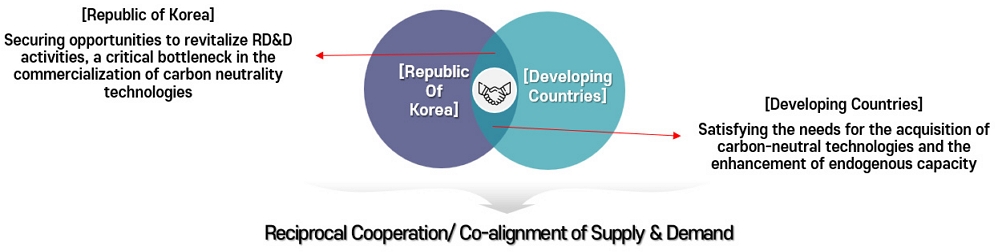
Reciprocal cooperation / co-alignment of supply and demand
Global RD&D targeting developing countries performs the following strategic functions in concrete terms. First, it provides a spatial fix for the demonstration environment. In the domestic context, dense regulations, lack of suitable sites, and already highly developed infrastructure impose limitations on conducting large-scale demonstrations of disruptive innovation technologies (Jiang et al., 2024; Son et al., 2020). By contrast, some developing countries provide relatively open environments through new city development, regulatory sandboxes, or the designation of special zones, and empirical studies show that well-designed demonstration programs can significantly enhance innovation and diffusion outcomes in such contexts (Bossink, 2017; Sajid et al., 2024). In particular, climate technologies require demonstration under heterogeneous conditions such as high temperatures, high humidity, weak power grids, and diverse agricultural environments, and data accumulated under these conditions enables technological advances that are difficult to achieve solely within domestic environments (Sajid et al., 2024).
Second, it provides an effective pathway for securing financial resources. Climate and clean energy projects in developing countries often face high capital costs and significant financial and institutional risks, which constrain private investment (Ikram and Es-sadki, 2025). In response, recent studies highlight the importance of policy-driven demonstration programs and risk-sharing mechanisms that blend public and private finance (Amoah and Marimon, 2022; Jiang et al., 2024). Global RD&D targeting developing countries enables the design of a structure that combines domestic public funding with international and private resources, thereby reducing the cost burden associated with high-risk demonstration phases (OECD, 2024).
Third, by preempting markets in consideration of the expanding demand for climate technologies in developing countries, it is possible to mitigate uncertainties arising from the narrow domestic market. Empirical and policy-oriented research indicates that investments and project pipelines in renewable energy, clean transport, and energy efficiency are growing rapidly in developing and emerging economies, and that early entry combined with robust demonstration track records can shape long-term competitive advantage (Yi and Kim, 2024). Accordingly, securing track records at an early stage through on-site demonstrations and preempting potential markets directly contribute to reducing market uncertainty while simultaneously enhancing the international competitiveness of domestic technologies (Climate Policy Initiative, 2024; Jiang et al., 2024).
This study proposes a mutually beneficial linkage (co-alignment) framework that prioritizes the returns of suppliers in order to translate the potential of demonstrations in developing countries into tangible outcomes (Ockwell and Byrne, 2016; Yi and Kim, 2024).
The core of the framework proposed in this study lies in mutual benefit that places the return of technology suppliers as the highest priority in project planning. At the international level, recent discussions on collaborative RD&D also stress the importance of moving beyond one-way technology transfer toward mutually beneficial innovation partnerships (Ockwell and Byrne, 2016; UNEP DTU Partnership, 2017). In this regard, the framework proposed in this study is differentiated in that it takes the strategic demands of suppliers as the starting point of the planning process, consistent with innovation-system approaches to climate technology cooperation (Ockwell and Byrne, 2016).
In order to prioritize the tangible returns of technology suppliers, this study defines its analytical scope as Korea’s Carbon-Neutral 100 Core Technologies, which were jointly identified by multiple ministries with the objective of achieving the national carbon neutrality mission (Ministry of Science and ICT, 2024). Based on this scope, the study designs a stepwise linkage (co-alignment) framework that starts from the supplier, moves to the demand side, and then returns to the supplier in a supplier–demand–supplier sequence (An, 2018; Yi and Kim, 2024). Through this systematic review process, this study proposes a series of methodological steps to simultaneously secure technological feasibility and market acceptability, and to derive priority and key implementation projects that align with national strategic objectives (Kattel and Mazzucato, 2018).
3. Data and Methods
The reciprocal framework proposed in this study is structured as a three-step sequential process that integrates quantitative and qualitative analyses (Bossink, 2017; Sajid et al., 2024). As a pilot application of this framework, this study defines Korea’s Carbon-Neutral 100 Core Technologies as the research scope and derives priority and promising technologies that, from the domestic perspective, maximize the strategic potential of overseas demonstration in developing countries while also aligning with their technological demands (Ministry of Science and ICT, 2024; Yi and Kim, 2024).
3.1. Research Scope – Carbon-Neutral 100 Core Technologies
As part of a mission-oriented R&D approach, the Korean government has identified science and technology as the key driving force for achieving carbon neutrality by 2050 through the fundamental transformation of high-emission sectors, including energy, industry, transport, buildings, and the environment (Government of the Republic of Korea, 2020; Ministry of Science and ICT, 2024). In this context, the government established the Carbon-Neutral Technology Innovation Promotion Strategy (Inter-ministerial Joint Initiative, 2021) and defined the Carbon-Neutral 100 Core Technologies by reflecting Korea’s unique geographical characteristics, industrial structure, and technological environment (Ministry of Science and ICT, 2021). In particular, the technology selection process strategically prioritized the following domestic specificities.
First, geographical constraints such as limited land availability and low average wind speeds were taken into consideration (Agora Energiewende, 2021). Unlike Europe or North America, where the development of large-scale renewable energy complexes is more favorable, domestic conditions make it particularly urgent to secure high-efficiency and large-scale technologies that maximize spatial efficiency (Agora Energiewende, 2021).
Second, the framework aimed to transform an industrial structure centered on carbon-intensive manufacturing sectors such as steel and petrochemicals. To effectively drive the transition of Korea’s core industries toward low-carbon processes, priority was given to disruptive innovation technologies that go beyond incremental efficiency improvements and fundamentally restructure industrial systems (Inter-ministerial Joint Initiative, 2021).
Third, the framework sought to secure technological sovereignty amid a global context in which climate technologies are emerging as new trade barriers. Reflecting the judgment that the localization and self-reliance of core technologies are essential to maintaining national competitiveness in response to international environmental regulations such as the Carbon Border Adjustment Mechanism (CBAM), this consideration was explicitly incorporated (Dentons Lee, 2025; OECD, 2024).
In the selection process, the government established the Carbon-Neutral Technology Planning Committee in February 2021, composed of experts from academia, industry, and research institutes. Subsequently, in June, a Special Committee on Carbon-Neutral Technologies was launched, consisting of five technical working groups covering energy, industry, transport, buildings/ICT, and the environment (Ministry of Science and ICT, 2021). Through consultations with government agencies and industrial stakeholders, the committee collected 562 technology demands and conducted a thorough review of domestic and international R&D trends (Ministry of Science and ICT, 2021).
Based on this analysis, 17 strategic technology areas were finalized in October 2021. These areas include, among others, solar power, wind power, hydrogen supply, energy storage, power grids, and nuclear energy (Korea Institute of Energy Research, 2021; Ministry of Science and ICT, 2021). Within these 17 areas, the committee evaluated carbon reduction potential, cost-effectiveness, and technological feasibility, deriving 447 candidate technologies across 114 subcategories. Subsequently, through a review process involving 233 top national-level experts, the Carbon-Neutral 100 Core Technologies optimized for Korea’s carbon-neutral pathway were finally confirmed (Ministry of Science and ICT, 2021; Yi and Kim, 2024).
3.2. Research Design
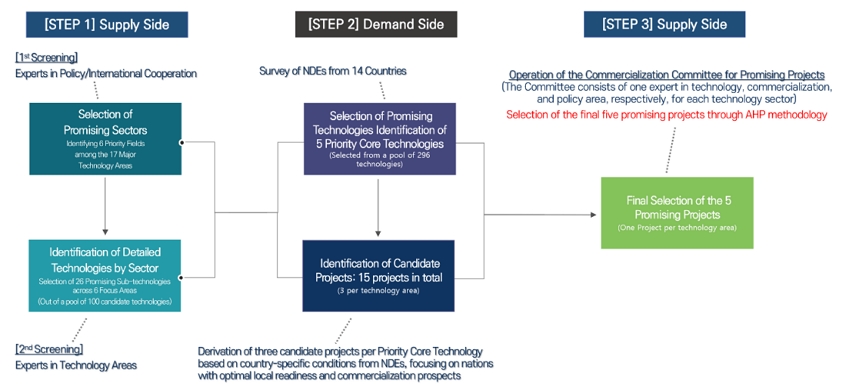
This study designs a supply-driven co-alignment process that begins with the strategic needs of technology providers, integrates the needs of recipients, and then returns to the provider perspective to determine final priority projects. The overall process is structured as a three-step feedback system, consisting of supplier-side analysis (Step 1), demand-side analysis (Step 2), and final supplier-side verification and prioritization (Step 3), as shown in Fig. 2.
A diagram of supply-driven co-alignment system
3.3. Methods
In this study, a logic model was employed as the core evaluation framework, to identify technology fields among domestic carbon-neutral technologies that are promising for overseas demonstration and international cooperation with developing countries, and to establish concrete evaluation criteria for deriving global RD&D projects by field (KISTEP, 2024). To fully realize the strategic potential of overseas demonstration projects targeting developing countries, a strategic approach grounded in a clear implementation rationale is essential, rather than arbitrarily selecting ongoing R&D projects (Bossink, 2017). Accordingly, evaluation indicators were constructed using the logic model, a representative framework applied across the entire cycle of policy and project planning, management, and evaluation (KISTEP, 2024). The logic model structurally presents the pathway through which a project achieves its objectives and clarifies the causal relationships among objectives, strategies, activities, inputs, and expected outputs, thereby enabling the verification of project efficiency and feasibility (KISTEP, 2024). In particular, at the planning stage, the logic model serves to identify design flaws or inconsistencies in implementation logic at an early stage and to preliminarily assess the operational viability of a project (OECD, 2024). At this stage, the analysis focuses on describing the project’s implementation logic itself, rather than on specific outputs or impacts. In Korea’s national R&D program feasibility studies, the logic model is also utilized as a core analytical tool.
First, problem definition explains the fundamental rationale and background for project implementation by identifying technological, social, and policy-related problems. Second, objectives specify the outcomes to be achieved through problem resolution and examine their appropriateness and feasibility. Third, activities define the concrete R&D tasks and implementation procedures required to achieve the stated objectives. Fourth, inputs refer to resources such as human capital, financial resources, and infrastructure, which serve as the basis for assessing the practical feasibility of project execution. Fifth, outputs specify the types and scope of direct results generated through project implementation. Sixth, assumptions identify external factors and risks that may influence project implementation in advance (KISTEP, 2024).
The logic model-based project planning framework provides an analytical structure for the strategic design of overseas demonstration (RD&D) projects in developing countries (Bossink, 2017; Sajid et al., 2024). In this study, technologies suitable for overseas demonstration in developing countries were progressively identified through a stepwise filtering approach applied to the Carbon-Neutral 100 Core Technologies, moving sequentially from promising fields (mid-level categories) to promising technologies (subcategories) and ultimately to promising elemental technologies (Ministry of Science and ICT, 2024). The feasibility of implementing the RD&D in developing countries is often determined less by the technical excellence of individual projects than by national policy priorities and institutional receptiveness in the recipient country (Ockwell and Byrne, 2016; Yi and Kim, 2024). Because policy acceptance at the sectoral level and the existence of demonstration infrastructure constitute prerequisite conditions for technology adoption, these factors should be assessed at higher levels rather than at the level of detailed technical items (Sajid et al., 2024; UNEP DTU Partnership, 2017). In this context, a hierarchical approach enables systematic, demand-driven screening by developing countries while maintaining coherence within the national technology system (Ockwell and Byrne, 2016).
- ① Step 1-1: Identification of Priority Technology Fields (International Cooperation and Policy Perspective)
Based on the designed evaluation criteria, a selection committee consisting of nine experts in technology commercialization and international cooperation was convened to identify priority technology fields (Amoah and Marimon, 2022; An, 2018). The expert committee conducted a comprehensive review of the 17 mid-level technology categories, considering factors such as suitability for demonstration in developing countries, the necessity of domestic and overseas demonstration, and policy priorities. Because climate technology cooperation with developing countries is often pursued on the basis of government-to-government (G2G) consultations, policy alignment and cooperation feasibility must be considered as primary criteria (Ockwell and Byrne, 2016; Yi and Kim, 2024). Through this process, priority fields with high potential for cooperation with developing countries were selected from among the 17 Carbon-Neutral mid-level categories (Ministry of Science and ICT, 2024).
To establish a foundation for identifying promising technologies and deriving project candidates, the elements of the logic model were operationalized into evaluation indicators and organized into the following five criteria.
- • Policy priority and alignment with mission-oriented R&D: This criterion assesses alignment with national mission-oriented R&D objectives and linkages with major policy programs, including national strategic technologies (Kattel and Mazzucato, 2018; Mazzucato, 2018).
- • Level of domestic demonstration completion: Based on technology readiness levels (TRLs), this indicator examines the extent of domestic demonstration to determine the necessity of overseas demonstration (IEA, 2021). When domestic demonstration is insufficient, it serves as a criterion to identify whether domestic demonstration should be prioritized prior to demonstration in developing countries.
- • Necessity of overseas demonstration: This criterion examines whether overseas, in-country demonstration meaningfully contributes to technological advancement and commercialization in light of domestic constraints related to infrastructure, institutional frameworks, and environmental conditions (Bossink, 2017).
- • Global technology development and investment trends: Global scalability is assessed by considering R&D investment levels in major countries for similar technologies, as well as support trends in international RD&D programs such as Horizon Europe, the Asian Development Bank (ADB), and the Green Climate Fund (GCF) (Climate Policy Initiative, 2024; OECD, 2024).
- • Appropriateness of overseas demonstration: This indicator evaluates feasibility and sustainability in the local context of developing countries by considering anticipated project scale, financing feasibility, and required implementation timelines (Sajid et al., 2024; UNEP DTU Partnership, 2017).
- ② Step 1-2: Selection of Promising Elemental Technologies (Technical Perspective)
The second-round screening is conducted with technical experts in the selected technology fields (Amoah and Marimon, 2022). Even within the same field, the necessity for and expected benefits of in-country demonstration in developing countries vary depending on the characteristics of individual elemental technologies (Sajid et al., 2024). Through expert review, promising detailed technologies suitable for demonstration in developing countries are identified from among the candidate pool of the 100 Core Technologies (Ministry of Science and ICT, 2024).
For the selected mid-level categories and detailed technologies (subcategories), advisory panels were formed, consisting of two technical experts per technology. The panels qualitatively assessed the appropriateness and implementation feasibility of overseas demonstration projects in developing countries for each elemental technology under the respective detailed technologies. The main aspects examined for each elemental technology during the evaluation process are as follows.
- • Domestic TRL of the relevant elemental technology.
- • Status of lead and participating institutions and whether demonstration activities have been conducted.
- • Scale and scope of ongoing demonstration, if applicable.
- • Necessity and objectives of overseas demonstration projects targeting developing countries.
- • Reasons and constraints in cases where demonstration is deemed unnecessary.
- • Types of domestic and international funding sources available for demonstration implementation.
- • Applicability and market potential of the technology in developing-country contexts.
These review items are all directly linked to the core components of the overarching project logic model, including issue definition, objective setting, inputs and activities, and outputs (KISTEP, 2024). By synthesizing expert opinions, promising technologies suitable for demonstration in developing countries are identified (Ockwell and Byrne, 2016; Sajid et al., 2024). These technologies subsequently form the core candidate pool for planning future in-country demonstration projects in developing countries and serve as a basis for specifying the linkage structure between priority technology fields and elemental technologies (Yi and Kim, 2024).
While the analysis in Step 1 focused on identifying technologies that should be prioritized for overseas demonstration (RD&D) from the supplier (Korea) perspective, this step incorporates the technology demands and priorities of recipients (developing countries). Accordingly, this stage aims to identify the intersection between supplier and demand perspectives in order to select promising technologies and to derive RD&D cooperation projects.
- ① Step 2-1: Demand Survey Targeting Nationally Designated Entities (NDEs) in Developing Countries
To investigate the actual demands on the side of developing countries, this study selected the Nationally Designated Entities (NDEs) of the Climate Technology Centre and Network (CTCN)—a key implementing body of the UNFCCC Technology Mechanism—as the survey target (UNFCCC, 2015; UNFCCC TEC/CTCN, 2024). CTCN is an operational institution that supports developing countries in responding to climate change and carries out activities related to technology cooperation and capacity building (UNEP DTU Partnership, 2017).
Each Party-designated NDE serves as a central entity that consolidates inputs from government agencies, research institutions, and industry within the country, and coordinates and approves national climate technology demands (UNFCCC TEC/CTCN, 2024). Because developing countries tend to pursue projects in a government-led manner based on national climate policies, selecting NDEs—who represent national-level technology cooperation needs and officially authorize international collaboration—as survey respondents is most appropriate for enhancing both project sustainability and policy alignment (Ockwell and Byrne, 2016; Yi and Kim, 2024).
Based on the survey, the study analyzes specific local conditions and policy orientations in developing countries using the pool of 296 elemental technologies, and matches these findings with the technology groups derived in Step 1 to identify five priority core technologies (Ministry of Science and ICT, 2024). At the demand survey stage, NDEs from each country provided inputs regarding their technology cooperation needs, including (i) the rationale for technology selection (policy and social background), (ii) relevant legal and institutional frameworks, and (iii) preferred forms of cooperation (e.g., joint research, technology transfer, pilot projects). The internal research team synthesized these inputs to analyze country-specific cooperation needs, institutional and market contexts, and the applicability points of each technology in developing-country settings (Sajid et al., 2024).
Based on these analytical results, a one-page project concept note was prepared for each elemental technology. Each concept note includes the project overview and objectives, technology description and application areas, target country and implementing institutions for demonstration, application strategy, project duration and budget, diffusion and commercialization strategy, institutional, political, and social stability (implementation risks), as well as expected impacts from technical, economic, social, and environmental perspectives.
The prepared proposals were submitted to field-specific technical experts (one expert per field, five experts in total) for review of their appropriateness in terms of technical feasibility, commercialization potential, and linkage to international cooperation.
- ② Step 2-2: Identification and Verification of Promising Project Candidates
Once promising elemental technologies with high demand are identified through the demand survey, a pool of concrete project candidates that can be developed into actual RD&D cooperation projects in developing countries is established (Sajid et al., 2024). In this process, country-specific conditions for each target country are collected and analyzed.
First, during the demand survey stage, NDEs provided detailed inputs on the policy and social rationale for technology selection, relevant legal and institutional frameworks, and preferred forms of cooperation (such as joint research, technology transfer, and pilot projects). The research team synthesized these inputs to analyze country-specific cooperation needs, institutional and market contexts, and local application points of the technologies.
Based on these analytical results, a one-page project concept note was prepared for each elemental technology, and the main contents included are as follows (Amoah and Marimon, 2022; Yi and Kim, 2024).
- • Project overview: Objectives, technology description, and application areas.
- • Implementation structure: Target country for demonstration, implementing institutions, and application strategy.
- • Project plan: Project duration, budget, and diffusion and commercialization strategy.
- • Risk management: Institutional, political, and social stability (implementation risks).
- • Expected impacts: Outcomes from technological, economic, social, and environmental perspectives.
The prepared proposals were submitted to field-specific technical experts (one expert per field, five experts in total) for validation in terms of technical feasibility, commercialization potential, and linkage to international cooperation. After incorporating the experts’ review comments through a refinement process, three candidate projects were finalized for each selected promising elemental technology, resulting in a total of 15 candidate projects.
In the final stage, the analysis returns to the supplier (Korea) perspective to determine the promising projects that should be prioritized from Korea’s standpoint, based on country-specific needs identified through the demand survey (Ockwell and Byrne, 2016; Yi and Kim, 2024). Even among countries exhibiting similar technological demands, a selection process is undertaken to identify priority projects by comprehensively considering Korea’s strategic interests and the likelihood of successful local demonstration (An, 2018).
Selection committees were operated separately for each promising elemental technology. Even for the same elemental technology, different cooperation projects can be developed depending on the demand country’s needs and its policy and institutional conditions; therefore, a pairwise comparison among the three candidate projects derived for each technology is essential (Amoah and Marimon, 2022). The committee applied the Analytic Hierarchy Process (AHP) to calculate relative priorities across the 15 candidate projects. By reflecting the integrated perspectives of technology, policy, and commercialization experts, projects were selected that balance not only technical excellence but also market acceptability and policy validity (KISTEP, 2024; Saaty, 1980). Ultimately, one promising project was selected for each technology, resulting in the final identification of five priority projects that satisfy reciprocity while maximizing the supplier’s strategic interests (Yi and Kim, 2024).
- ① Composition of the Selection Committee and Evaluation Method
A Selection Committee composed of field-specific experts was convened to evaluate the 15 promising project candidates identified in the previous stage. To reflect a multidimensional perspective encompassing technical feasibility, policy linkage, and commercialization potential, the committee was composed of technical experts, policy experts, and project planning specialists.
The Selection Committee was operated separately for each of the five promising elemental technologies, and applied the AHP to determine relative priorities among the 15 candidate projects through pairwise comparisons. AHP is one of the multi-criteria decision-making (MCDM) methods and is particularly useful for deriving priorities among multiple alternatives by quantifying qualitative judgments.
- ② Design and Application of the AHP-Based Evaluation Framework
- (Step 3-1) Design of the AHP Analysis Framework
In the first stage of the AHP analysis, four major evaluation categories (Level 1)—policy alignment, technical feasibility, feasibility of implementing the RD&D, and expected impacts and spillover effects—were established to reflect the objectives of this study and the characteristics of climate technology cooperation projects (Saaty, 1980). Subsequently, detailed evaluation indicators (Level 2) were defined under each major category. The specific evaluation indicators for each subcategory are presented as follows.
- (Step 3-2) Weight Calculation and Consistency Verification
First, weights were assigned to each criterion used for selecting promising projects. The relative importance among the four upper-level criteria—policy and strategic alignment, technical alignment, feasibility of implementing the RD&D, and expected impacts and spillover effects—was compared, followed by pairwise comparisons of the relative importance of the detailed evaluation indicators constituting each upper-level criterion. Experts evaluated relative importance on a 1–9 scale; according to Saaty’s (1980) criteria, a Consistency Ratio (CR) ≤ 0.20 was set as the acceptable range.
- (Step 3-3) Evaluation and Final Selection of Candidate Projects
For each five key elemental technology that was selected in STEP 3-2, three candidate projects were compared within each technology to select the most promising ones. Each project was assessed based on scores that reflected the weights of four criteria: policy and strategic alignment, technological coherence, feasibility of implementing the RD&D, and expected impacts and spillover effects. The evaluation revealed that the consistency ratio (CR) for all technology groups ranged between 0.1 and 0.2, meeting the AHP acceptance criteria; one final project from each field was identified as a promising global RD&D project.
- (Step 3-4) Verification and Interpretation
The AHP results were cross-checked by experts in technology and project planning. Beyond simple weighted sum results, the analysis thoroughly considered the institutional and market conditions of developing countries, the potential for local partnerships, and possible risk factors. Through this process, the ultimately selected promising projects are confirmed to be those that ensure both demonstration feasibility and policy linkage in developing countries.

AHP evaluation criteria for selection of promising projects
4. Results
4.1. Step 1: Supplier-Centered Analysis
Based on the evaluation indicators presented in the previous section—(1) policy priority and alignment with mission-oriented R&D, (2) level of domestic demonstration completion, (3) necessity of overseas demonstration, (4) global technology development and investment trends, and (5) appropriateness of overseas demonstration—a selection committee composed of experts in technology commercialization and international cooperation (nine members in total) was convened to identify priority technology fields. The expert committee conducted its assessment across the 17 mid-level categories of the Carbon-Neutral 100 Core Technologies.
To ensure balance across major technology categories in the field selection process, an adjustment procedure was applied to avoid excessive concentration in any single major category (e.g., the energy transition sector). As a result, seven fields—solar power, energy storage, power grids, CCUS, zero-energy buildings, eco-friendly vehicles, and nuclear energy—were initially selected.
However, with regard to the nuclear energy field, significant divergence of opinions emerged among the nine committee members concerning its suitability for overseas demonstration (RD&D) in developing countries. Accordingly, additional consultations were conducted with domain-specific technology experts. The consultation results indicated that, although nuclear technologies—particularly small modular reactors (SMRs)—have recently attracted substantial interest in developing countries and the necessity for future cooperation is sufficiently recognized, the characteristics and TRLs of nuclear-related elemental technologies currently included in the Carbon-Neutral 100 Core Technologies suggest that domestic demonstration should be prioritized before overseas application.
Therefore, while nuclear energy is considered a promising technology in the long term, it was assessed as not a field for which overseas demonstration projects in developing countries should be planned as a short-term or priority focus, and was thus excluded. Through this process, a total of six priority fields—solar power, energy storage, power grids, CCUS, zero-energy buildings, and eco-friendly vehicles—were finally selected.
An additional selection procedure was conducted for detailed technologies (subcategories) within each of the identified priority mid-level fields, using the same expert selection committee. The committee members carried out comprehensive evaluations by considering factors such as TRL, suitability for demonstration in developing countries, potential for international cooperation, and commercialization potential of each technology.
As a result, a total of 16 detailed technologies (subcategories) were identified across the six priority fields, and these technologies were used as the core candidate pool constituting the specific target technology groups for future overseas demonstration (RD&D) projects in developing countries (See Table 3.1 in Appendix 3).
For the six mid-level categories and 16 detailed technologies (subcategories) selected in the previous section, an expert advisory committee was established by considering the characteristics of each technology and domain-specific expertise (two experts per technology, covering 16 subcategories, for a total of 32 experts). The committee conducted qualitative assessments of the appropriateness and implementation feasibility of overseas demonstration projects in developing countries for the elemental technologies under each detailed technology.
Following the indicators presented in Section 3.2.1—including the domestic TRL of each elemental technology and the status of lead and participating institutions and demonstration activities—the expert opinions were synthesized to identify technologies suitable for overseas demonstration. As a result, a total of 26 elemental technologies were derived as promising technology groups that are appropriate for demonstration (RD&D) in developing countries and require priority implementation (See Table 3.2 of Appendix 3). These technologies serve as the core candidate pool for planning future in-country demonstration projects in developing countries and provide the basis for concretizing the linkage structure among priority technology fields, detailed technologies, and elemental technologies.
4.2. Step 2: Demand-Centered Analysis
Survey requests were sent to the Nationally Designated Entities (NDEs) of a total of 30 countries across Asia, Africa, and Latin America and the Caribbean (LAC). Valid responses were obtained from 14 countries (N = 14). The respondent countries were Tajikistan, Zimbabwe, The Gambia, Pakistan, Afghanistan, the Philippines, Malaysia, Palestine, Cambodia, Bangladesh, Sri Lanka, Lao PDR, Jordan, and Kazakhstan. The regional distribution of the respondent countries is presented in Table 2.
Regional distribution of respondent countries
In the survey, summaries of technology briefs for developing countries were provided for the six priority fields and 26 elemental technologies, including (i) technology definitions, (ii) applicability in developing-country contexts, and (iii) expected impacts when applied in developing countries. Respondents were asked, at the national level, to select the top three technology fields (mid-level categories) with the highest cooperation demand, as well as the elemental technologies with particularly high demand within each selected field. For the first-, second-, and third-priority technologies, respondents were allowed to select more than two options. Priority weights were assigned as follows: 45% for first priority, 35% for second priority, and 20% for third priority, and composite scores were calculated accordingly. As a result of the analysis, five core elemental technologies that showed consistently high demand across a majority of respondent countries were identified, and these were used as priority candidate technologies for planning customized RD&D demonstration projects in developing countries in the subsequent stage (Table 3).2)
Elemental technologies selected through the demand survey in developing countries (5 technologies)
Based on the demand survey presented in Section 3, five promising elemental technologies with high demand from developing countries were identified. In this subsection, a pool of promising project candidates was constructed by developing concrete projects that can be advanced into actual RD&D cooperation initiatives in developing countries, building on these technologies.
First, during the demand survey stage, NDEs from each country provided inputs regarding their technology cooperation needs, including (i) the rationale for technology selection (policy and social background), (ii) relevant legal and institutional frameworks, and (iii) preferred forms of cooperation (e.g., joint research, technology transfer, pilot projects). The internal research team synthesized these inputs to analyze country-specific cooperation demands, institutional and market contexts, and key points for applying each technology in developing-country settings.
Based on these analytical results, a one-page project concept note was prepared for each elemental technology. Each concept note included the project overview and objectives, technology description and application areas, target country and implementing institutions for demonstration, application strategy, project duration and budget, diffusion and commercialization strategy, institutional, political, and social stability (implementation risks), and expected impacts from technological, economic, social, and environmental perspectives.
The prepared proposals were submitted to field-specific technical experts (one expert per field, five experts in total) for review of their appropriateness in terms of technical feasibility, commercialization potential, and linkage to international cooperation. After incorporating revisions based on expert feedback, cases in which more than three countries expressed demand for a given technology in the NDE demand survey were addressed using a purposive sampling approach grounded in expert judgment by the research team. To ensure objectivity in the selection process, qualitative screening criteria—including policy alignment, technology absorption capacity, and demonstration feasibility—were established. Based on these criteria, three countries were finally selected for each promising technology, resulting in a total of 15 candidate projects.
The pool of promising project candidates derived through this process constitutes cooperation-based projects that jointly reflect the actual demands of developing countries and the applicability of domestic technologies, and thus possesses strong potential to be developed into future international joint RD&D projects. The final set of selected promising project candidates is summarized in Table 4.
Promising project candidates (three per technology, total: 15)
4.3. Step 3: Supplier-Centered Analysis
The AHP MCDM analysis was conducted for five technology fields that are selected as primary technologies—BIPV, agrivoltaics, high-power lithium-ion batteries, power grid operation and engineering, and reuse/recycling of secondary batteries—selected based on the Carbon-Neutral 100 Core Technologies. The evaluation was conducted by a multidisciplinary committee comprising 15 expert roles across the technology, policy, and commercialization sectors. Notably, two policy experts were assigned to evaluate the policy aspects of two technological areas each. This was based on their specialized domain knowledge and policy proficiency in both respective fields, allowing for a more integrated and expert-driven assessment of the policy dimensions. Consequently, the committee consisted of a total of 13 unique individual participants. The expert group conducted the assessment by considering not only technological feasibility but also the potential for demonstration in developing countries and linkage with policy frameworks.
Table 5 presents the average weights for each first-level item. The average weights were derived in the following order: Feasibility of Implementing the RD&D (0.324), Policy & Strategic Alignment (0.238), Technological Coherence (0.219), and Expected Impact and Spillover Effects (0.219). This implies that, because of the characteristics of RD&D projects in developing countries, the feasibility of local demonstration and policy or institutional linkage is considered more important than technological innovativeness. The CR values in each category were all below 0.2, confirming they were within the acceptable range. Although some sub-items slightly exceeded 0.1, the level of logical consistency remained within the acceptable standard for AHP.
Weights by AHP evaluation indicator
The feasibility of implementing the RD&D showed the highest overall importance (average weight: 0.324), indicating that, owing to the nature of RD&D cooperation with developing countries, field applicability and demonstration-based verification served as key determinants in the evaluation.
By contrast, technological coherence and policy/strategic coherence showed variations by field, and technologies with weaker industrial or institutional foundations tended to receive relatively lower scores.
Based on the field-specific AHP analysis results, the top-ranked project was identified for each technology sector. In fields that prioritized demonstrability and spillover effects (like power grid and recycling), projects with higher potential for on-site application received higher scores. Conversely, in sectors emphasizing technological innovation (such as lithium-ion batteries and BIPV), factors such as technological coherence and economic feasibility were more important. These results show that when Korea’s Carbon-Neutral Core Technologies align with the policy and market needs of developing countries, they can develop into demonstration-focused cooperative RD&D models rather than just technology transfer.
AHP score of each promising project
4.4. Verification and Interpretation of the Final Selection of Promising Projects
The AHP results underwent a rigorous cross-verification process by a multidisciplinary panel of experts in technology and project planning. Moving beyond a purely quantitative weighted sum, the analysis integrated a qualitative review of the socio-institutional and market dynamics within the target developing countries. This comprehensive assessment accounted for local partnership potentials, institutional readiness, and systemic risk factors. Through this iterative process, the study finalized five promising projects that demonstrated the highest synergy between technical demonstration feasibility and strategic policy linkage. The specific profiles and the rationale for the selection of these five priority projects are summarized in Table 7.
Results and rationale for selection of promising projects by technology area
5. Discussion
5.1. Conclusion
This study empirically demonstrates that the core driving force of global RD&D cooperation lies in the precise integration of the strategic “push” of technology suppliers and the policy-driven “pull” of recipient countries (Ockwell and Byrne, 2016; Sajid et al., 2024). In particular, to overcome chronic limitations of existing cooperation projects with developing countries—such as one-off outcomes and low levels of sustained engagement—this study designed and validated a supplier-driven, reciprocal co-alignment process that begins from the supplier perspective, integrates the needs of recipients, and ultimately returns to the supplier perspective to determine final priority projects (Amoah and Marimon, 2022; Yi and Kim, 2024).
First, through supplier-side strategic analysis (Step 1), this study presents a systematic approach for identifying a portfolio through which domestic research actors can obtain substantive technological rewards (Bossink, 2017; An, 2018). A two-stage screening process was implemented, in which six priority fields with high potential for G2G-based cooperation were first identified through screening by policy experts, followed by a second screening by technical experts that derived 26 promising elemental technologies capable of overcoming the limitations of domestic demonstration (Ministry of Science and ICT, 2024). By positioning researchers’ “want-to-do” technological demands as the starting point of project planning, this approach provides a strategic foundation for enhancing the activation of RD&D targeting developing countries and for improving the sustainability of cooperation with developing-country partners (Mazzucato, 2018; Yi and Kim, 2024).
Second, through the demand-side analysis and matching process (Step 2), the study linked the supplier’s technological solutions to the actual policy demands of developing countries (targeted pull) (Ockwell and Byrne, 2016; Sajid et al., 2024). The survey of Nationally Designated Entities (NDEs) from 14 countries went beyond identifying simple technology preferences and instead captured local legal and institutional frameworks and infrastructure conditions, which were subsequently operationalized into a pool of one-page project concept notes (UNFCCC TEC/CTCN, 2024). This process functioned as a core mechanism for establishing a reciprocal RD&D structure, providing suppliers with opportunities to obtain extreme-climate data that are difficult to secure domestically, while offering recipient countries solutions optimized for achieving their NDC targets (IPCC, 2023; UNEP DTU Partnership, 2017).
Third, the final selection and verification from the supplier perspective (Step 3) represents the stage at which project feasibility is consolidated through multidisciplinary evaluation by expert committees (Amoah and Marimon, 2022; KISTEP, 2024). Based on the results of the AHP involving experts in technology, commercialization, and policy, the evaluators assigned the highest weight to demonstration feasibility, reflecting an intention to manage execution risks that are characteristic of developing-country contexts (Saaty, 1980). In particular, policy experts in Step 3 played a decisive role by calibrating the weights between technological and business-related criteria to determine overall strategic value (OECD, 2024; Yi and Kim, 2024). Through this process, the five final priority projects were identified as optimal pathways capable of simultaneously achieving technological advancement and the establishment of a global track record (Bossink, 2017; Sajid et al., 2024).
5.2. Implications
The reciprocal co-alignment framework proposed in this study offers the following important implications at a time when the paradigm of global climate technology cooperation is undergoing a transition.
Recently, the Climate Technology Centre and Network (CTCN) addressed the “Collaborative RD&D Strategic Framework (2025–2030)” as a key agenda item at its 25th Advisory Board meeting (April 2025), highlighting the growing need for reciprocal RD&D cooperation (UNFCCC TEC/CTCN, 2024). This discussion reflects an emerging shift away from CTCN’s traditional cooperation model, which has been fundamentally recipient-centered, relying on technology matching based on beneficiary countries’ Response Plans, toward a more reciprocal cooperation structure (UNEP DTU Partnership, 2017).
This study holds significant academic value in that it does not leave the international discourse on reciprocity at a declarative level, but instead adopts a “supplier-led reverse-thinking approach” that positions the strategic needs of domestic research actors—as technology suppliers—as the starting point of project planning (Mazzucato, 2018; Yi and Kim, 2024). By doing so, the study presents a concrete methodological pathway capable of effectively mobilizing the participation of actual technology suppliers in reciprocal global RD&D cooperation (Ockwell and Byrne, 2016; Sajid et al., 2024).
For the potential of overseas demonstration in developing countries to translate into tangible outcomes, technology suppliers—namely researchers—must act proactively (An, 2018; Bossink, 2017). However, until now, systematic guidance has been lacking on how to determine which technologies are optimally suited to local conditions in developing countries. If researchers approach overseas demonstration solely on the basis of their currently ongoing R&D projects, there is a risk that they will fail to fully leverage strategic interests, such as acquiring context-specific environmental data or establishing a global track record (Yi and Kim, 2024).
The framework proposed in this study provides concrete selection criteria for domestic researchers to strategically utilize developing countries as testbeds when confronted with the “demonstration valley of death” arising from institutional constraints and market uncertainty (IEA, 2023; OECD, 2024). By enabling a systematic review of the supply portfolio from the technology selection stage onward, the framework functions as a practical guideline (tool) that encourages voluntary and proactive participation by researchers (Amoah and Marimon, 2022; KISTEP, 2024).
5.3. Limitation and Future Research
This study provides meaningful insights as an exploratory case analysis that reexamines the strategic value of overseas demonstration projects in developing countries; however, several limitations also point to directions for future research. First, because the findings are primarily derived from the responses of NDEs in 14 countries, future studies could incorporate additional valid responses from currently underrepresented regions—such as Latin America and the Caribbean (LAC)—to better reflect more diverse regional characteristics. In addition, building on the expertise of the committee members involved in the AHP analysis, gradually expanding the number of participating experts in future research could further strengthen the statistical robustness and reliability of the analytical results.
In addition, incorporating the perspectives of international organizations and global financing experts—such as the Green Climate Fund (GCF) and the Climate Technology Centre and Network (CTCN)—into the currently domestic stakeholder–centered evaluation framework could enable a more multidimensional prioritization that also captures global funding potential.
To further enhance analytical validity, cross-validation utilizing quantitative indicators—such as publication and patent counts or objective TRLs—presents a valuable future research pathway. However, as the focus of this study remains on the “Carbon-Neutral 100 Core Technologies” targeted for commercialization by 2030 or 2050, many remain at early stages of maturity, making it inherently challenging to secure comprehensive statistics on patent outputs or granular investment figures at this juncture. Furthermore, given that the research aims to estimate the potential of applying these technologies specifically within the unique environments of developing countries, the analysis prioritized the qualitative assessments of technology, policy, and international cooperation experts over immediate numerical metrics to better capture expected outcomes.
Ultimately, as these technologies evolve and advance, the accumulation of robust quantitative datasets will become feasible. Building on this progress, the research scope could be further expanded by advancing indicator systems that quantify expected impacts and spillover effects following demonstration projects. Such advancements will facilitate more precise forecasting of the long-term socio-economic influence of global RD&D on domestic industries, thereby providing a more sophisticated strategic framework for national climate technology policy.
Acknowledgments
This study was conducted based on the research outcomes of the 2025 National Institute of Green Technology (NIGT) project titled “Research on Project Development and Facilitating Global RD&D for Korea’s Carbon-neutral Technologies (C2520201).”
Notes
References
- African Development Bank. 2020. Zimbabwe energy sector review. Abidjan: AfDB.
- Agora Energiewende. 2021. 2050 climate neutrality roadmap for Korea (K-Map 2.0). Agora Energiewende.
-
Amoah C, Marimon F. 2022. What drives project management success in developing countries? The case of Ghana. TEC Empresarial 16(2): 55-78.
[https://doi.org/10.18845/te.v16i2.6186]

- An S. 2018. Types and importance–performance (IPA) analysis of R&D demonstration projects and improvement suggestions. KISTEP Issue Weekly 2018-26.
- Asian Development Bank. 2020. Climate-resilient infrastructure guidelines for Bangladesh. Manila: ADB.
-
Bossink BAG. 2017. Demonstrating sustainable energy: A review-based model of sustainable energy demonstration projects. Renewable Sustainable Energy Rev 77: 1349-1362.
[https://doi.org/10.1016/j.rser.2017.02.002]
- CEA-Liten. 2022. Annual report 2022: Low-carbon energy and circular economy solutions. Grenoble, France: French Alternative Energies and Atomic Energy Commission (CEA).
- Climate Policy Initiative. 2024. Global landscape of climate finance 2024. Climate Policy Initiative.
- Dentons Lee. 2025. 2050: The path to net zero – Governmental policy, legal and business implications in South Korea. Dentons Lee.
- Eighth Plan for the Promotion of Technology Transfer and Commercialization. 2022. The 8th master plan for the promotion of technology transfer and commercialization. Government of the Republic of Korea.
- European Commission. 2014. Horizon 2020 work programme 2014–2015: General annexes – G. Technology readiness levels (TRL). Brussels: European Commission.
- First Basic Plan for Climate Change Response Technology Development. 2022. First basic plan for climate change response technology development (2022–2026). Government of the Republic of Korea.
- Government of the Republic of Korea. 2020. 2050 carbon-neutral strategy of the Republic of Korea: Long-term low greenhouse gas emission development strategy. Government of the Republic of Korea.
- Government of the Republic of Korea. 2021. Act on the Promotion of Technology Development for Climate Change Response (Act No. 18072).
- Green Technology Center. 2018. Supporting climate technology demonstration (RD&D) based on bilateral cooperation frameworks. Green Technology Center.
- IEA. 2021. Net zero by 2050: A roadmap for the global energy sector. International Energy Agency.
- IEA. 2023. Energy technology perspectives 2023: Financing clean energy transitions. International Energy Agency.
-
Ikram M, Es-sadki J. 2025. Assessing barriers to the adoption of green technologies in developing countries by using an integrated decision-making system. Sustainable Dev.
[https://doi.org/10.1002/sd.70571]
- Inter-ministerial Joint Initiative. 2021. Strategy for technology innovation for carbon neutrality. Government of the Republic of Korea.
- IPCC. 2023. Climate change 2023: Synthesis report. Contribution of working groups I, II and III to the sixth assessment report of the Intergovernmental Panel on Climate Change. IPCC.
-
Jiang Y, Zhang Y, Janjua LR. 2024. Does energy transition policy enhance urban green innovation capability? Evidence from China’s New Energy Demonstration City policy. Front Environ Sci 12: 1377274.
[https://doi.org/10.3389/fenvs.2024.1377274]
- Jolly VK. 1997. Commercializing new technologies: Getting from mind to market. Boston, MA: Harvard Business School Press.
-
Kattel R, Mazzucato M. 2018. Mission-oriented innovation policy and dynamic capabilities in the public sector. Ind Corporate Change 27(5): 787-801.
[https://doi.org/10.1093/icc/dty032]
- KCCI–SGI. 2023. Survey on challenges faced by domestic climate-tech firms in securing finance. Korea Chamber of Commerce and Industry, Sustainability Growth Initiative.
- KEGOC JSC. 2021. Annual report 2021. Nur-Sultan, Kazakhstan: Kazakhstan Electricity Grid Operating Company (KEGOC); [accessed 2026 Mar 9]. https://www.kegoc.kz/en/for-investors-and-shareholders/raskrytie-informatsii/annual-reports/
- Kim S, Lee S. 2019. Advanced support strategies for government R&D demonstration. KISTEP Issue Paper 2019-15.
- KISTEP. 2024. Detailed guidelines for conducting preliminary feasibility studies of national R&D programs. Korea Institute of Science & Technology Evaluation and Planning.
- Korea Institute of Energy Research. 2021. Korea Institute of Energy Research brochure 2021. Korea Institute of Energy Research.
- Korean Association for Regulatory Studies, Federation of Korean Industries. 2024. Regulatory innovation strategies for climate technologies.
-
Mazzucato M. 2018. Mission-oriented innovation policies: Challenges and opportunities. Ind Corporate Change 27(5): 803-815.
[https://doi.org/10.1093/icc/dty034]
- Ministry of Science and ICT. 2021. Strategy for technology innovation for carbon neutrality (Press release, March 31, 2021). Ministry of Science and ICT.
- Ministry of Science and ICT. 2024. Carbon-Neutral 100 Core Technologies (policy report). Ministry of Science and ICT.
-
Nassary EK, Magubika AJ, Mwampashi LL, Fukah FK, Kahangwa CA, Tryphone GM. 2025. Transitioning to clean energy and opportunities for developing countries. Energy Strategy Rev 62: 101909.
[https://doi.org/10.1016/j.esr.2025.101909]
- National Institute of Green Technology. 2023. Establishing foundations for climate technology demonstration projects in developing countries: Focusing on project selection and evaluation. National Institute of Green Technology.
-
Ockwell D, Byrne R. 2016. Improving technology transfer through national systems of innovation: Climate relevant innovation-system builders (CRIBs). Clim Policy 16(7): 836-854.
[https://doi.org/10.1080/14693062.2015.1052958]
- OECD. 2015. Frascati manual 2015: Guidelines for collecting and reporting data on research and experimental development (6th ed.). OECD Publishing.
- OECD. 2024. Bridging the clean energy investment gap: Aligning risk-sharing instruments in emerging markets. OECD Publishing.
- OECD. 2025. Challenges and opportunities of mission-oriented innovation policy in Korea. OECD Publishing.
-
Park S. 2022. Financing strategies for adaptation to and mitigation of climate change in developing countries through official development assistance. J Clim Change Res 13(2): 275-281.
[https://doi.org/10.15531/KSCCR.2022.13.2.275]
-
Saaty TL. 1980. The analytic hierarchy process: Planning, priority setting, resource allocation. McGraw-Hill.
[https://doi.org/10.21236/ADA214804]
-
Sajid MJ, Zhang Y, Janjua LR. 2024. Breaking barriers: Assessing technology transfer for climate-resilient development. Environ Technol Innovation 33: 103471.
[https://doi.org/10.1016/j.eti.2023.103471]
-
Seres S, Haites E, Murphy K. 2009. Analysis of technology transfer in CDM projects. UNFCCC.
[https://doi.org/10.1016/j.enpol.2009.06.052]
- Son S, Park J, Park S, Yoon J, Lee D. 2020. Performance analysis and development strategies for demonstration testbeds. Science and Technology Policy Institute.
- Sustainable and Renewable Energy Development Authority. 2021. Bangladesh solar master plan. Dhaka: SREDA.
- Sustainable Energy Development Authority Malaysia. 2022. Renewable energy progress report 2022. Putrajaya: SEDA Malaysia.
- UNEP DTU Partnership. 2017. Renewable energy and energy efficiency in developing countries: Contributions to reducing global emissions. UNEP DTU Partnership.
- UNFCCC. 2015. Paris Agreement (FCCC/CP/2015/10/Add.1, Decision 1/CP.21). United Nations Framework Convention on Climate Change.
- UNFCCC Technology Executive Committee, Climate Technology Centre and Network. 2024. Joint annual report of the Technology Executive Committee and the Climate Technology Centre and Network to the Conference of the Parties. UNFCCC.
- U.S. Department of Energy. 2016. Technology readiness assessment guide (DOE G 413.3-4A). Washington, DC: U.S. Department of Energy.
- World Bank. 2022. Kazakhstan power sector modernization program. Washington, DC: World Bank Group.
-
Yi JY, Kim TK. 2024. Advancing international green technology cooperation: A comprehensive framework approach. J Appropriate Technol 10(2): 107-123.
[https://doi.org/10.37675/jat.2024.00535]
- Zimbabwe Electricity Supply Authority. 2021. National renewable energy policy (NREP). Harare: ZESA.
Appendix
Appendix 1
1.1. Conceptual Evolution of Demonstration and the Strategic Role of “Bridges”
The conceptual definition of demonstration has evolved from a terminal stage in a linear R&D model into a complex, non-linear process aimed at resolving inherent uncertainties between technology development and market entry (Jolly, 1997). Jolly (1997) proposed a five-stage non-linear model of technology commercialization, placing particular emphasis on the importance of “bridges” — the connective processes between stages. In this framework, demonstration functions as a critical bridge linking the incubation and promotion phases, serving as a strategic mechanism to validate technical feasibility while simultaneously securing the trust of potential investors and customers (Jolly, 1997). This multifaceted nature is further categorized by international standards; for instance, the OECD Frascati Manual distinguishes demonstration-type activities that belong to R&D from those that fall outside R&D, differentiating engineering-oriented technical demonstration from user- or policy-oriented demonstration aimed at social acceptance (OECD, 2015).
1.2. Historical Expansion and Definition of Demonstration in the Korean Context
Within the South Korean R&D landscape, the role of demonstration has expanded its scope in response to shifting national priorities (An, 2018). While demonstration in the 1990s was largely confined to technical verification for process efficiency in manufacturing, it evolved after the 2000s into a tool for economic value creation by reducing commercialization uncertainties (An, 2018). Since the 2010s, its importance has further shifted toward a stage for validating social value to address complex challenges such as climate change and energy transition (An, 2018). Synthesizing these discussions, this study defines demonstration as “the process of applying technologies under real‑world environmental conditions to demonstrate performance and applicability while facilitating evaluation by actual or potential stakeholders,” drawing on both international standard-setting documents and domestic policy analyses (An, 2018; Jolly, 1997; OECD, 2015). This definition underscores that demonstration must transcend controlled laboratory settings to occur within real-world contexts through interaction between developers and users (Bossink, 2017; Jiang et al., 2024).
1.3. Operationalization of Demonstration Stages and Discrepancies in TRL Interpretation
This study utilizes the TRL framework, an international standard, to operationally define the stages of demonstration (European Commission, 2014; U.S. Department of Energy, 2016). International organizations, such as the U.S. Department of Energy and EU Horizon Europe, generally regard TRL 5 to 7 as the core demonstration phase, specifically defining TRL 7 as “system prototype demonstration in an operational environment” (European Commission, 2014; U.S. Department of Energy, 2016). However, in South Korea, there is a prevailing tendency to interpret TRL 7 as the stage immediately preceding commercialization, as reflected in domestic R&D program guidelines and evaluation practices that classify TRL 7 and above as de facto pre-market or near-commercial stages (An, 2018; Korea Institute of S&T Evaluation and Planning, 2017). This leads to a structural discrepancy whereby the scope of technical demonstration is effectively restricted to TRL 5 and 6, while TRL 7 is often treated as quasi-commercial pilot deployment rather than experimental demonstration (An, 2018). This interpretive gap serves as a critical variable when analyzing global RD&D funding, because international innovation initiatives mandate rigorous operational-environment testing at TRL 7, whereas domestic projects in Korea tend to concentrate on business-centric demonstrations between TRL 7 and 9 (An, 2018; European Commission, 2014; U.S. Department of Energy, 2016).
Appendix
Appendix 2
2.1. Composition of the 100 Core Technologies
The Carbon-Neutral 100 Core Technologies are organized in a systematic hierarchical structure that progresses from major categories to subcategories, core technologies, and elemental technologies, based on technological characteristics and application fields (Ministry of Science and ICT, 2024). The overall framework consists of four major categories, 17 mid-level categories, and 100 subcategories (core technologies), and defines a total of 296 elemental technologies to enable the detailed implementation of each core technology (Ministry of Science and ICT, 2024).
At the major category level, the framework is divided into four domains: energy transition, industrial decarbonization, transport and building efficiency, and carbon absorption and removal. These domains encompass the key sectors with high mitigation contributions in the national carbon-neutral scenario (Government of the Republic of Korea, 2020; Agora Energiewende, 2021). The 17 mid-level categories include areas such as solar power, wind power, hydrogen, steel, and carbon capture, utilization, and storage (CCUS), reflecting the strategic importance of each field. The complete list of mid-level categories is presented in Table A2.1 (Ministry of Science and ICT, 2021).
List of 17 mid-level categories
The 100 subcategories represent clusters of core technologies selected in consideration of their technological spillover effects and commercialization potential (Yi and Kim, 2024). The government has further specified these 100 core technologies into 296 elemental technologies, which are used as benchmarks for establishing R&D investment priorities and technology acquisition strategies (Ministry of Science and ICT, 2024). By adhering to this official government technology classification framework, this study ensures both the objectivity of the analysis and its alignment with national policy priorities (Ministry of Science and ICT, 2024; OECD, 2025).
This study defines the Korea’s Carbon-Neutral 100 Core Technologies as its primary analytical scope because this technology group constitutes the substantive backbone of mission-oriented R&D for national carbon-neutral implementation (Mazzucato, 2018; Ministry of Science and ICT, 2024). These technologies represent the core components of mission-oriented R&D that the government has selected by mobilizing national capabilities to address the grand challenge of achieving carbon neutrality by 2050 (Government of the Republic of Korea, 2020; OECD, 2025). The rationale for adopting this technology group as the research scope is that it ensures strategic necessity from the perspective of Korea as a technology supplier and supports cooperation at the G2G level with developing countries; at a minimum, this technology group clearly reflects areas of explicit and sustained interest by the Korean government (Yi and Kim, 2024).
In particular, the technology set was composed of strategic technologies that must be secured by comprehensively reflecting domestic conditions, including limited land availability, low wind resources, resource constraints, and an industrial structure centered on carbon-intensive manufacturing (Agora Energiewende, 2021). These technologies span 17 key strategic areas, ranging from renewable energy such as solar and wind power to hydrogen, CCUS, secondary batteries, the decarbonization of the steel and cement industries, and efficiency improvements in the building and transport sectors, and function as critical instruments for achieving the 2030 NDC targets and realizing carbon neutrality by 2050 (IPCC, 2023).
However, paradoxically, the very domestic constraints that underpinned the selection of these technologies instead function as bottlenecks that hinder their final maturation and commercialization. The specific constraints are as follows (An, 2018; Son et al., 2020).
- • Geographical constraints: Limited land availability physically restricts the development of large-scale renewable energy demonstration complexes (Agora Energiewende, 2021).
- • Lack of climatic diversity: Constrained climatic conditions make it difficult to verify technological performance across a wide range of environmental variables (Korea Institute of Energy Research, 2021).
- • Infrastructure lock-in effects: Highly advanced existing systems can paradoxically become entry barriers when demonstrating the practical effectiveness of disruptive innovation technologies (Nassary et al., 2025).
- • Institutional rigidity: Strict regulatory frameworks are advantageous for ensuring safety but tend to limit the flexible demonstration opportunities required for innovative technologies (Korean Association for Regulatory Studies and Federation of Korean Industries, 2024).
Ultimately, for Korea’s Carbon-Neutral 100 Core Technologies to move beyond the research stage and be successfully diffused, global RD&D cooperation that can compensate for domestic limitations is essential (Ockwell and Byrne, 2016; Sajid et al., 2024). Based on this rationale, this study defines the 100 Core Technologies as its analytical scope and explores pathways to enhance technological maturity through overseas demonstration in developing countries (Bossink, 2017; Yi and Kim, 2024).
Appendix
Appendix 3. List of Selected Technologies
List of promising mid-level and subcategory technologies
Selected promising elemental technologies (total: 26)